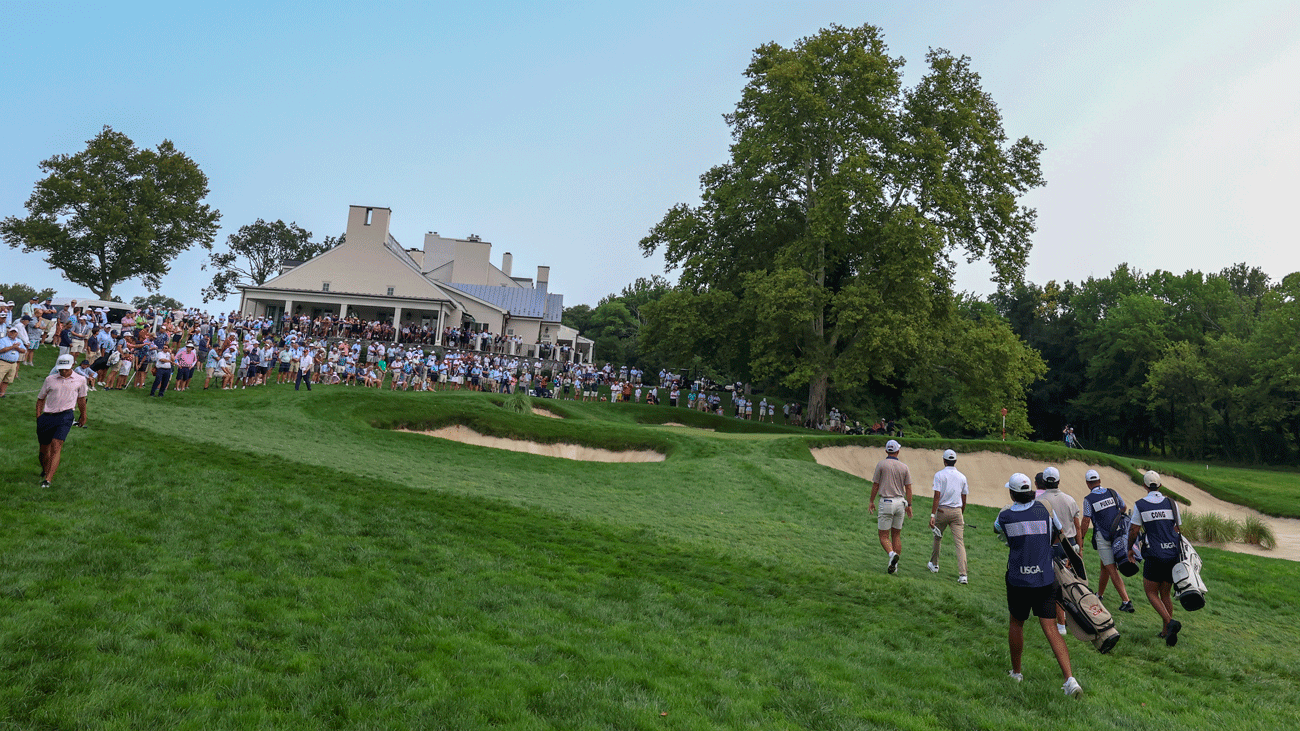


For many players, some of those target landing areas will not only be too short for a driver, but also for modern 3-woods and mini drivers, too.
Many in the field have chosen to combat this with a traditional setup of either a 5-wood or driving iron for their third spot in the bag. But more than a third of players in the 312-man field have opted for a hybrid or high-lofted fairway wood (21˚ and up).
To me, it’s the hybrid or high-lofted fairway wood that makes the most sense (and it’s what I did when I played), for one simple reason: control. We saw the same scenario play out with Tour pros at last year’s U.S. Open. By employing a 7-wood, players can get more height and spin, thus shortening the rollout, making the shot more predictable.
That’s especially crucial given the last task your top-of-bag clubs need to satisfy at Merion.
; "This part of the bag is key for the U.S. Amateur at Merion 1")
Jack Hirsh/GOLF
Long shots from the rough
Miss the fairway at Merion, and you WILL be penalized.
From the back tees, players who find the rough could also find approaches from over 230 yards on key holes like 5, 6, 18 and the two par-5s. If they have the speed to muscle a 3-iron out of this stuff, more power to ’em, but this is where hybrids and high-lofted fairways earn their place in the bag.
I specifically chose my Titleist GT1 hybrid to play Merion because it has a very sharp leading edge to cut through the turf better. I also treat it as an in-between club, blending the action of a hybrid and a 7-wood. In my experience, the versatile hybrid/7-wood type club proved worth it for tee shots on 7 and 14 and it turned out to be the right club on tee shots like Nos. 12 and 16.
So while a short, firm Northeastern course might scream utility iron (and plenty in the field are going that route), there might be some better options for most players.
Some long-game options I like for Merion
Titleist GT1 Hybrid

View Product
ALSO AVAILABLE AT: PGA TOUR Superstore, Titleist
Callaway Apex Utility Wood

The Apex UW is designed for serious, avid golfers seeking the perfect blend of a fairway wood’s power and a hybrid’s versatility. Engineered with Tour feedback and loaded with performance technologies, it delivers a higher, more neutral ball flight with the control all players demand. TUNGSTEN SPEED WAVE A dynamic, 41g+ tungsten wave structure positions mass low and forward, enhancing ball speed and launch—particularly on low-face strikes where players tend to lose distance. STEP SOLE DESIGN A redesigned sole with a stepped geometry reduces turf interaction, helping to maintain swing speed through impact and promoting more consistent contact across different lies. TRIAXIAL CARBON CROWN The lightweight carbon construction allows for strategic weight redistribution, creating a more forgiving clubhead while refining launch and spin for greater shot-making control. TOUR-INSPIRED SHAPING Designed with input from the world’s best, the compact, refined shape and neutral face angle inspire confidence at address and deliver workability from tee to turf.
View Product
Ping G440 Hybrid

The G440 hybrids appeal to a variety of skill levels, each engineered to deliver different ball- flight characteristics – from the slightly fade-biased 2 hybrid for off-the-tee performance to the draw-inducing 5, 6 and 7 hybrids that help optimize gapping. They all share a new, shallower and thinner face design, which improves face contact for more ball speed and higher-launching shots that hit and hold the green. FLIES HIGH LANDS SOFT Optimized launch and spin ensure distance with stopping power. FREE-HOSEL DESIGN Saves weight to lower CG, optimize launch/spin and increase forgiveness. ROUNDED SOLE Ensures pleasing face angle in all hosel settings CARBONFLY WRAP Lightweight carbon crown saves weight to increase MOI, lower CG.
View Product
Cobra King Tec Hybrid

View Product
TaylorMade Qi4D Hybrid

RESCUE™ YOUR ROUND Advanced multi-material construction combines 450 stainless steel and a carbon fiber crown creating the ultimate iron replacement option. The Qi4D Rescue™ is designed to hit desired carry yardages while maintaining a steep landing angle, providing golfers the ultimate tool to hold greens with added utility from any lie. ADJUSTABLE PERFORMANCE Utilizing a single Trajectory Adjustment System (TAS) weight (8g) provides the golfer a more mass efficient way to adjust flight, spin and swing weight. 3° loft sleeve can be used to adjust loft, lie and face angle for optimized flight. CG OPTIMIZATION Engineers achieved a balanced CG placement for optimal flight and workability by utilizing an ultralight carbon crown and strategically positioned TAS weight for more iron-like performance. TOUR PROVEN TECHNOLOGIES Cut-through Speed Pocket™ protects ball speed and reduces spin on low-face strikes. Advanced CAD modeling creates a design with a clean and powerful sound, a foundation for TaylorMade rescue performance. Twist Face™ features corrective face curvature designed to provide straighter shots on mishits.
View Product
Ping G440 Max Fairway Wood (7- or 9-wood)

The G440 fairway family (MAX, LST, SFT) advances PING’s reputation as a Tour-preferred model of choice through a re-designed face structure and low CG system. The face is taller for more confidence off the tee while maintaining a CG location that delivers high- launching performance off the ground. The MAX model (which fits most golfers) is available in five lofts (including a new 4-wood) to provide more gapping solutions. HIGH MOI Easy to launch, stable design increases forgiveness. FLEXING FACE Maraging steel face flexes for more ball speed, optimizes spin. TALLER FACE PROFILE Improves performance off the tee, maintains low CG. FREE-HOSEL DESIGN Saves weight to lower CG, optimize launch/spin and increase forgiveness.
View Product
TaylorMade Qi4D Fairway wood

PROVEN RECIPE TaylorMade Fairways have dominated on Tour for over a decade because of their unique performance recipe, which enables maximum distance and versatility. The Qi4D fairway is designed for golfers who want the most advanced technology while still prioritizing versatility and control with amazing distance. ADJUSTABLE PERFORMANCE Utilizing a single Trajectory Adjustment System weight (8g x1) provides the golfer a more mass efficient way to adjust flight, spin and swing weight. 4° loft sleeve can be used to adjust loft, lie and face angle for optimized flight and is available in all lofts. REFINED ATTRIBUTES, BIG CHANGES Engineers conducted an objective analysis of all the performance attributes and discovered new methods to enhance performance and confidence. Sit points, lie angles, address views, and center of gravity locations were all updated based on Tour feedback and the expertise of leading fitters worldwide, ensuring the optimal fairway across skill levels. TOUR-PROVEN TECHNOLOGIES New and improved cut-through Speed Pocket™ protects ball speed and reduces spin on low-face strikes. Advanced CAD modeling creates a design with a clean and powerful sound, a foundation for TaylorMade fairway performance. Twist Face™ features corrective face curvature designed to provide straighter shots on mishits. Multi-Material Construction allows engineers to maximize performance by increasing discretionary weight.
View Product